


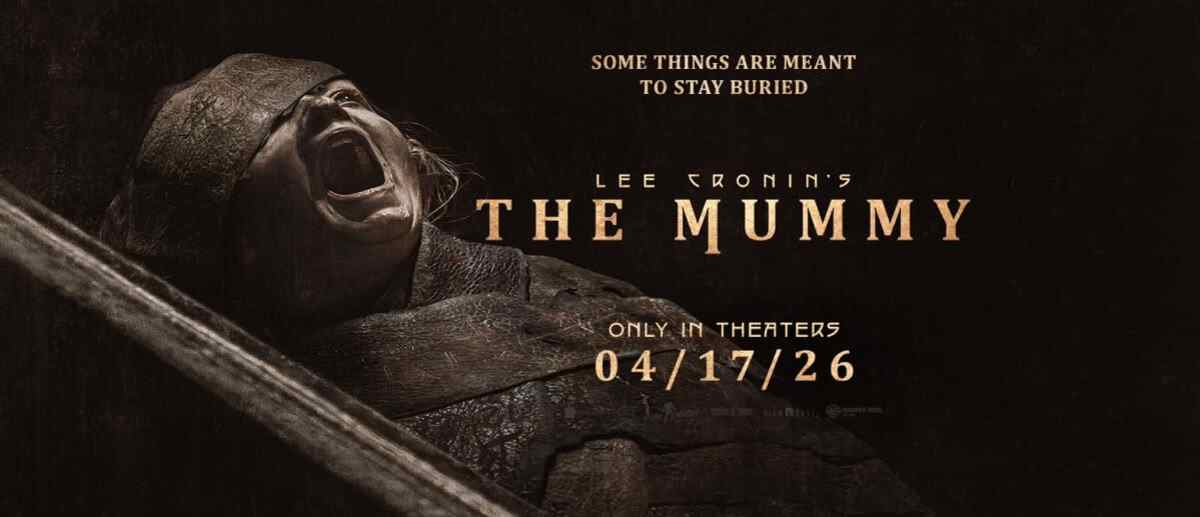

The iconic Mummy franchise has returned to the big screen in 2026 with a bold and terrifying reinvention, shifting away from its traditional action-adventure roots into full-fledged horror. Directed by Lee Cronin, this latest reboot, Lee Cronin’s The Mummy, is redefining what audiences expect from one of Hollywood’s oldest monster stories.
Released globally on April 17, 2026, the film marks a significant departure from earlier versions that leaned heavily on adventure and humor. Instead, this reboot dives deep into psychological horror, body horror, and supernatural terror, making it one of the darkest interpretations of the franchise to date.
The story follows a journalist and his family whose lives are shattered when their young daughter mysteriously disappears in Egypt. Years later, she is found inside an ancient sarcophagus, but what returns is no longer the same child. As the family struggles to understand what happened, they uncover an ancient evil that transforms their reunion into a horrifying nightmare.
Unlike previous adaptations, which focused on treasure hunts and ancient curses with a sense of spectacle, this version strips away the blockbuster charm and replaces it with raw fear. The film is heavily inspired by classic horror storytelling, blending elements of supernatural possession and psychological trauma. Critics have noted that the film prioritizes scares over storytelling familiarity, making it a bold but risky creative shift.
The cast, led by Jack Reynor, delivers emotionally intense performances that anchor the film’s disturbing narrative. Supporting actors like Laia Costa and May Calamawy contribute to the eerie atmosphere, while newcomer Natalie Grace plays a pivotal role as the transformed daughter. Their performances help elevate the film beyond a typical horror experience, focusing on family trauma and emotional breakdown.
One of the most talked-about aspects of the reboot is its visual style and tone. The film embraces a gritty, unsettling aesthetic with disturbing imagery and intense gore, earning it an R rating. This shift has sparked both praise and criticism, with some viewers applauding its originality while others feel it strays too far from the franchise’s legacy. Even promotional materials for the film have stirred controversy, with some audiences finding the imagery too disturbing for public spaces.
At the box office, the film has had a mixed start. While it managed a modest opening, it struggled to compete with bigger releases, reflecting the divided audience response. Despite this, its relatively low production budget means it still has the potential to become profitable over time.
What makes this reboot particularly interesting is its place in the broader evolution of Hollywood. After the failure of previous attempts to build interconnected cinematic universes, studios are now focusing on standalone, experimental storytelling. The Mummy (2026) reflects this shift, prioritizing creative risk over franchise formula.
Ultimately, this new version of The Mummy is not trying to recreate the past—it is attempting to redefine it. By embracing horror in its purest form, the film offers a fresh, if polarizing, take on a classic story that has been told for nearly a century. Whether audiences embrace this darker vision or long for the adventure-driven versions of the past, one thing is clear: The Mummy is evolving, and this reboot marks a significant turning point in its cinematic journey.